Material Information
What is 14K & 18K Gold?
- 14K & 18K refer to the Karat (K), which measures the purity of the gold.
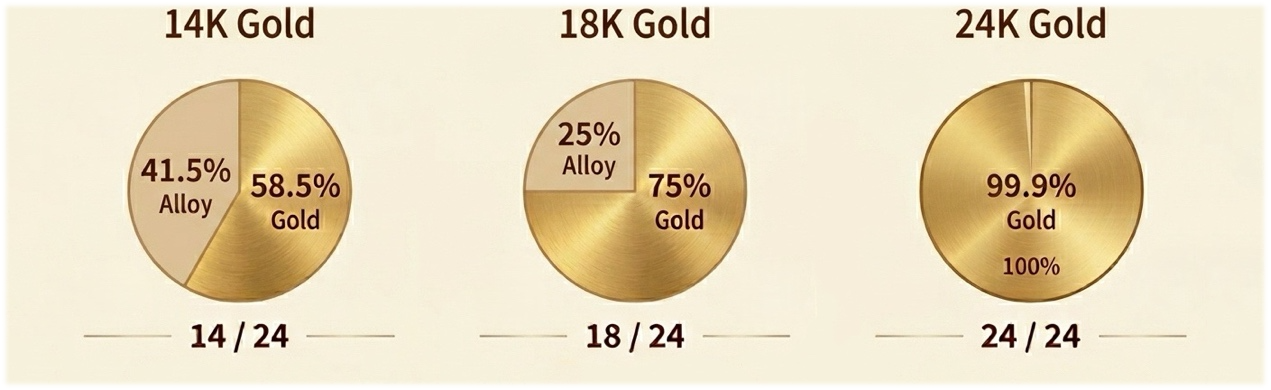
- The scale is based on 24K being pure gold (approx. 99.99%). Because pure gold is very soft and prone to deforming and wearing down, it is often alloyed with other metals (such as silver, copper, nickel, or zinc etc.) to increase its durability and change its colour, which makes it suitable for setting gemstones or intricate craftsmanship.
- 18K Gold
- Contains 75% gold. It retains a rich, warm yellow tone that looks more like pure gold.
- Higher value and less likely to cause skin irritation. It is less prone to tarnishing or oxidation over time.
- Usually stamped as “18K” or “Au750”
- 14K Gold
- Contains 58.5% gold. Because it contains a higher percentage of base metals, it is significantly harder.
- Extremely durable and resistant to wear and tear. The yellow color is slightly paler compared to 18K.
- Usually stamped as “14K” or “Au585”
Can I wear solid gold jewellery in the shower?
- Yes, specifically plain gold items. But prolonged exposure to soap, shampoo and hard water can leave residue to dullness. Furthermore, chlorinated water and salt water can oxidize metals and damage settings. Therefore, it is recommended to remove jewellery before showering, swimming, or using skincare products.
- Special attention: Pearls should not get wet, water dulls luster and weakens glue.
